
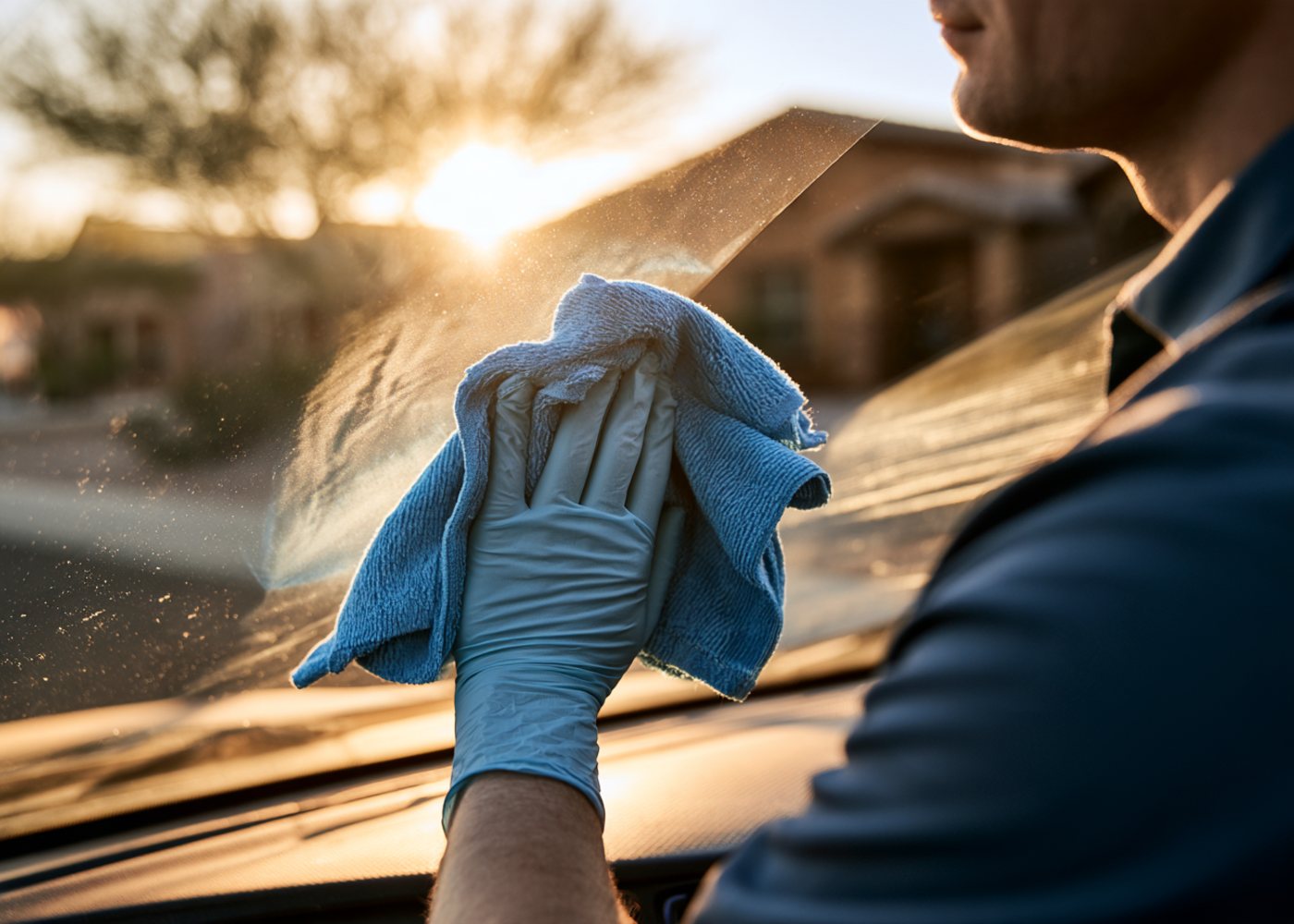
A hazy film on the inside of your windshield usually comes from residue building up on the glass: vapors released by interior plastics in the heat, oils from hands, smoke or vape residue, and overspray from dashboard dressings. Wiping it with a dry paper towel only smears it, but a clean microfiber towel and the right cleaner will clear it in a few minutes.
In the East Valley, this film builds up faster than most drivers expect. A car parked in a Mesa or Chandler driveway bakes for months every year, and that heat is exactly what drives the haze onto the glass. Late November is when most people notice it, because the low winter sun hits the windshield at the worst possible angle.
What Causes the Film on Your Windshield
Most interior glass haze is a mix of several sources. Knowing where it comes from helps you keep it from coming right back.
- Off-gassing from interior plastics. Dashboards, door panels and trim contain compounds that slowly release vapors, especially when the cabin gets hot. Those vapors settle on the coolest flat surface nearby, which is usually the windshield. This is the same thing behind the “new car smell.”
- Skin oils and fingerprints. Every time someone touches the glass to point at something or adjust the mirror, they leave oil behind.
- Smoke and vape residue. Both leave a sticky film that spreads across all the glass and gets worse with each trip.
- Dash dressings and protectants. Shiny spray products on the dashboard can mist onto the windshield when applied, and some keep releasing residue in the heat afterward.
- Dust and HVAC buildup. The defroster blows directly at the glass. Fine desert dust and anything sitting in the vents ends up there too.
Why It Looks Worse This Time of Year
The film is there all year. You just see it more in winter.
From November through February, the sun sits lower in the sky. During morning and evening commutes it shines almost straight through the windshield, and every bit of haze lights up into a bright glare. Driving east on the US 60 in the morning or west on the Loop 202 in the evening can make an otherwise clear windshield look frosted.
Night driving has the same problem. Oncoming headlights scatter across the film and create starbursts and halos. Cooler mornings also mean more defroster use, and a hazy windshield fogs faster because moisture clings to the residue.
So while the cause is mostly summer heat, the payoff for cleaning it comes now.
How to Clean the Inside of Your Windshield
The inside of the windshield is awkward to reach, which is why it gets skipped. Here is a simple method that works.
What You Need
- Two clean, dry microfiber towels (one for cleaning, one for buffing)
- An ammonia-free glass cleaner
- A glass cleaning tool with a pivoting head, or just a towel folded into a pad
The Two-Towel Method
- Park in the shade with the engine off. Glass cleaner evaporates fast on warm glass and leaves streaks. Shade also lets you see the haze better from an angle.
- Spray the towel, not the glass. Spraying the windshield sends cleaner onto the dashboard and into the defroster vents.
- Wipe in straight lines. Work top to bottom on one half of the windshield, then side to side. Straight passes make it easy to see where you missed.
- Buff right away with the dry towel. This step removes the residue you loosened. Skipping it is the main reason people end up with streaks.
- Check from the driver seat. Look through the glass toward a light source. If you still see smears, repeat with a fresh side of the towel.
- Do the lower corners last. The area where the glass meets the dash collects the most film. A towel wrapped around your hand or a slim tool helps here.
Change towel sides often. A towel loaded with residue just moves it around.
Use a Tint-Safe Cleaner
Many cars in Arizona have tinted side and rear windows, and many glass cleaners contain ammonia. Ammonia can break down window film over time and cause bubbling or discoloration. Use an ammonia-free cleaner on all of your glass so you never have to remember which windows are tinted.
Avoid household multi-surface cleaners and anything scented or greasy. They often leave their own film, which puts you right back where you started. Plain distilled water on a clean microfiber can handle light haze between deeper cleanings.
How to Keep the Haze From Coming Back
You cannot stop interior plastics from releasing vapors, but you can slow how fast the film returns.
- Use a sun shade. A good windshield shade keeps the dash and cabin cooler, which reduces off-gassing.
- Skip glossy dash sprays. If you like to protect your dashboard, choose a non-greasy, matte finish product and apply it with a towel, never by spraying near the glass.
- Keep the vents clean. Dust in the defroster vents gets blown at the windshield every time you use it.
- Keep your hands off the glass. It sounds simple, but it helps.
- Clean the glass every few weeks. A quick wipe before the film builds up takes far less effort than removing months of residue.
When to Let a Pro Handle It
Interior glass is included in every ShineCo package. Our Standard Shine Detail covers windows inside and out, and the Deluxe Shine Detail adds a deeper clean of the dash and vents, which removes two of the main sources of the film. If your interior needs more than just clear glass, see what our interior detailing covers.
We clean every window inside and out, including the tight corners at the base of the windshield that are hard to get to from the driver seat. Because our units are fully self-contained, we can do it in your driveway in Gilbert or your office lot in Tempe without you being there.
If the outside of the glass also has white mineral spots from sprinklers or hard water, mention it when you book so we plan for it.
Frequently Asked Questions
Why does my windshield fog up faster when the inside is dirty?
Moisture condenses more easily on a surface with residue on it, and the film holds the droplets in place. A clean windshield fogs less and clears faster when you run the defroster. Cleaning the inside glass is one of the simplest ways to improve visibility on cool mornings.
Is the film on my windshield harmful to breathe?
The film comes mostly from the same compounds behind the new car smell, plus everyday dirt and oils. Keeping the cabin cooler with a sun shade and airing the car out after it has been sitting in the heat reduces how much builds up. Regular cleaning removes what has already settled on the glass.
Can I use newspaper or paper towels to clean my windshield?
Paper towels leave lint behind and tend to smear oily residue instead of lifting it. Newspaper can work in a pinch but leaves ink on your hands and trim. Two clean microfiber towels give a streak-free finish with far less effort.
ShineCo is a family-owned mobile detailing company based in Mesa. We come to you at home or work anywhere in the East Valley and bring our own water and power, so all you need is a parking spot. Ready for clear glass on your next sunrise commute? Book online or call or text (480) 448-2888, and we will bring everything we need to your home or office.


